

What is International Baccalaureate ® (IB)
International Baccalaureate ® (IB) aims to develop curious, informed and empathic young people, ready to make a contribution to a better and more peaceful world through cultural awareness and respect. IB programmes are internationally recognised for their academic rigour and their emphasis on nurturing critical thinking and personal responsibility.
Each IB programme is built around the IB Learner Profile, which describes a list of qualities, skills and responsibilities beyond the strictly academic context. This profile encourages self-respect, respect for others and the environment, thus determining students to become balanced individuals, involved in their community.
In Genesis College, we put this profile at the core of the learning process, nurturing the harmonious intellectual, social, emotional and physical development of children.
Genesis College, the first accredited private school in Romania, is a pioneer in the private education landscape, as it is one of the few institutions in the country licensed to provide all the three programmes of the International Baccalaureate ® (IB) – PYP, MYP and DP.
The Advantages of the IB International Programme
The IB Learners become autonomous and motivated young individuals, able to successfully manage both university studies, and the ongoing changing world. The IB programmes help students:

Full IB Education Continuum: PYP, MYP, DP
IB programmes at Genesis College provide the full education continuum, starting from the first kindergarten years, and all through the high school. All the three programmes, PYP, MYP and DP are connected by the IB philosophy and Approaches to Teaching and Learning. The programmes encourage learners’ both personal and academic achievements, challenging them to excel during classes, as well as in their individual growth.
Experiential Learning and International Thinking
IB programmes include quality practices from national and international research and from the IB global community. They encourage learners to develop international thinking, in a complex and hyperconnected world.
Students Learn How to Learn
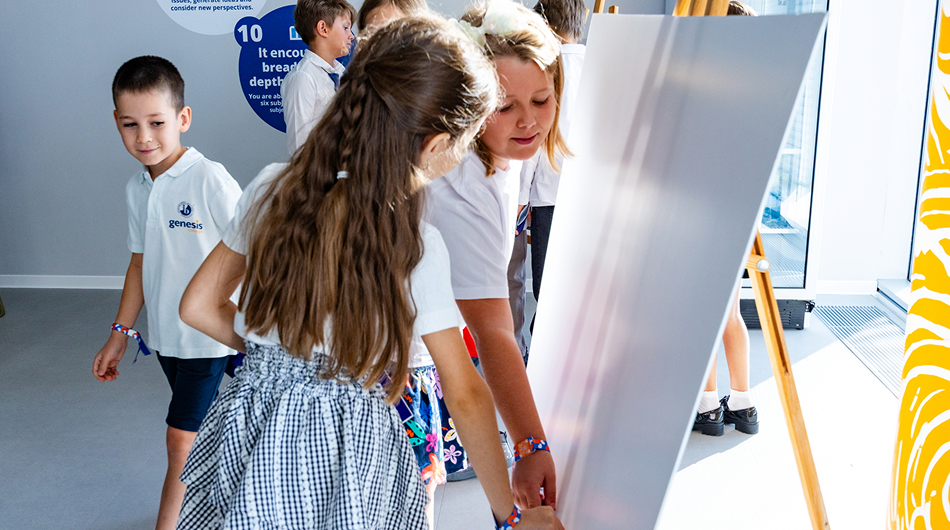
All through all the IB programmes, learners develop Approaches to Learning skills and attributes of the IB learner profile. The IB student is positively challenged to think critically and to learn in a flexible environment, going beyond the subject, culture and nation.
The IB programmes help learners: ask challenging questions, think critically, learn several subjects and develop useful research skills for higher education. At the same time, they are encouraged to be active in their communities and to implement learning to actual contexts.
The structure of the Genesis College IB programmes
PYP – Primary Years Programme
3-10 years
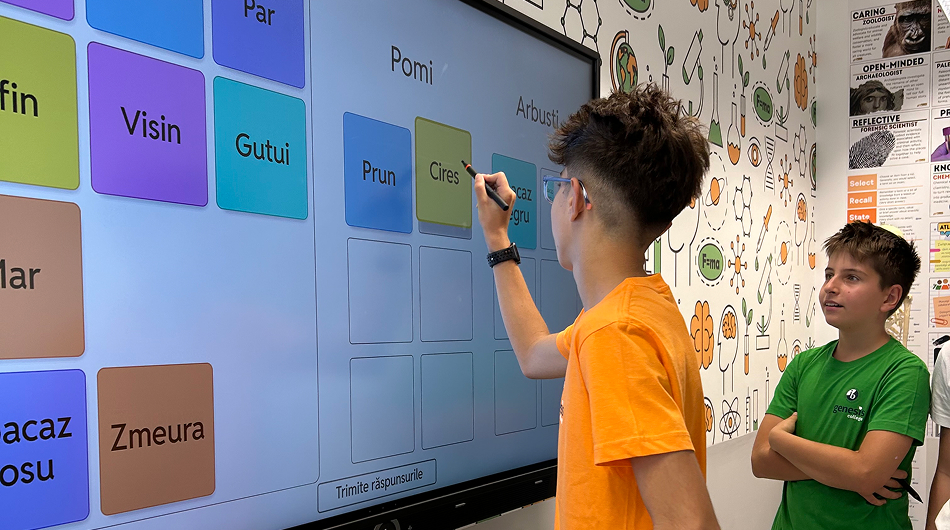
PYP starts in kindergarten and finishes in the 4th grade. It puts emphasis on active, transdisciplinary and student-centred learning. Learners go through the Romanian curriculum content integrated in six cross-disciplinary themes, learning through discovery and individual and group research.
The Final Exhibition, the PYP final project, marks the transition to middle school. It gives our students the opportunity to put to use their abilities acquired along the primary school years.
MYP – Middle Years Programme
11–16 years
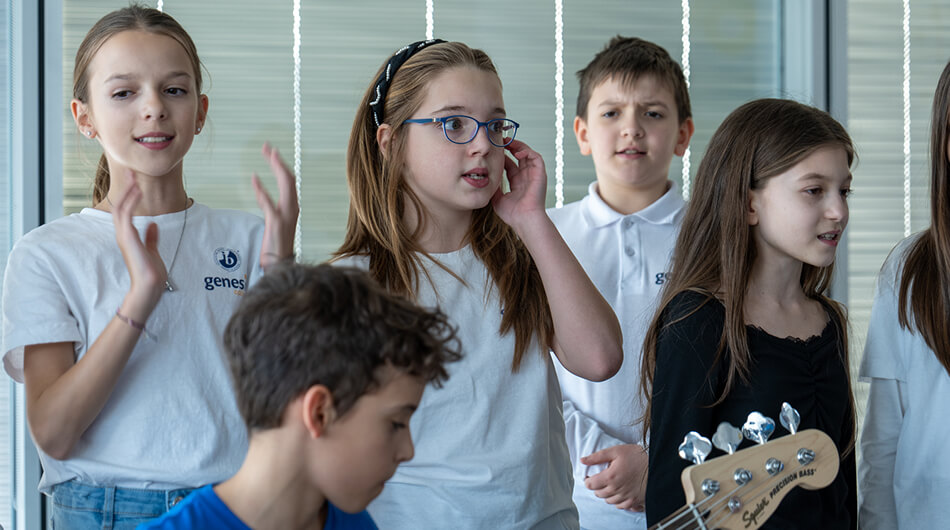
The MYP is for grades 5 through 10. It provides a learning environment which puts emphasis on creativity, critical thinking and reflection. The subjects of the Romanian curriculum are grouped in eight broad categories (language and literature, science, mathematics, arts, etc.). Learning is organised through interdisciplinary approaches.
MYP culminates with a Personal Project, a lengthy project which engages learners to put into practice their research, organisation and reflection skills developed all along the programme.
DP – Diploma Programme
16–19 years
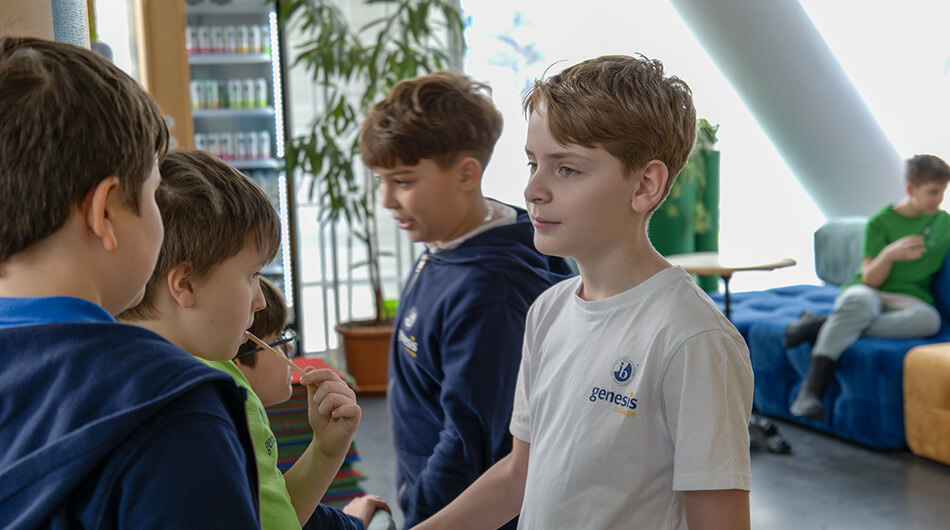
The Diploma Programme is the IB programme destined for high school students (grades 11 and 12). It is the culmination of their pre-university academic journey. The curriculum covers six groups of subjects and three fundamental elements: Theory of Knowledge (TOK), Extended Essay (EE) and Creativity, Activity, Service (CAS). Learners study six subjects at the same time, at Standard Level (SL) or Higher Level (HL), thus developing analysis, independent research and management skills similar to the higher education workload.
The IB Diploma is recognised and appreciated by universities and employers worldwide. It is seen as an index of a solid academic training and of a global approach to learning.